

The German Shepherd Dog is a highly intelligent, large, agile, muscular dog of noble character. Loyal, courageous, confident and steady, the German Shepherd is truly one of a kind!
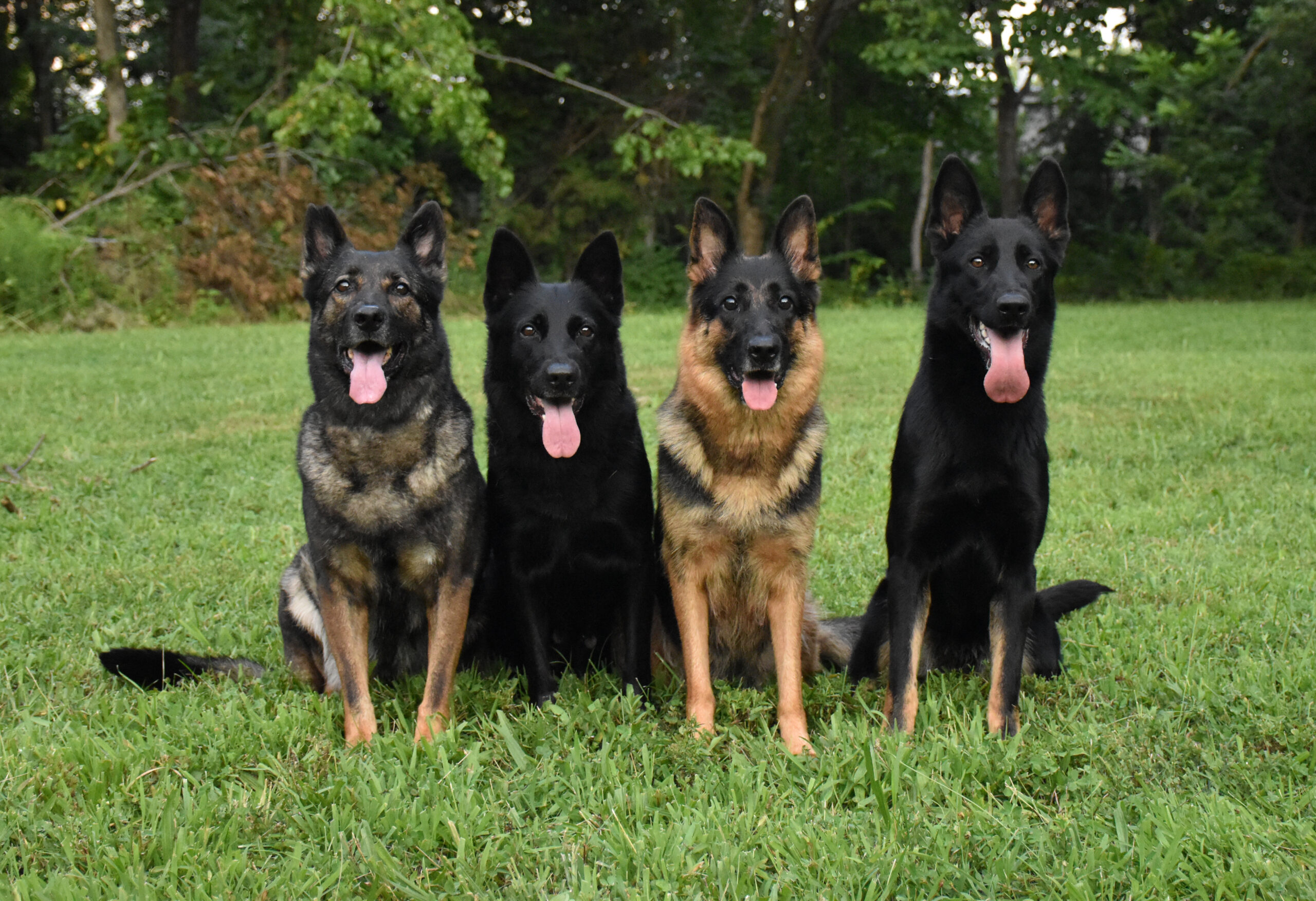
German Shepherd’s are one of the most popular working dog for a reason! Experts say the German Shepherd Dog’s defining attribute is character: loyalty, courage, confidence, the ability to learn commands for many tasks, and the drive and willingness to put their life on the line in defense of loved ones. They have fight drive, prey drive, defense drive, and the German Shepherd is an exemplary example in history of a dog bred carefully into a utilitarian working dog who may not be the best at it all, but can do it all! They make formidable partners in fighting crime as Police K9’s, work as Military Working Dogs, and even as family companions and personal protectors! German Shepherds will be gentle family pets and steadfast guardians, but, the breed standard says, there’s a certain aloofness that does not lend itself to immediate and indiscriminate friendships.
German Shepherds come in a wide variety between all of the bloodlines and different personality types and drive levels. They come in a variety of colors and shapes and sizes sometimes within the breed.


Most German Shepherds are healthy dogs. A responsible breeder will check the health of their dogs before they become breeding dogs. German Shepherds can struggle with health conditions that can be tested and carefully and tactfully bred around like Degenerative Myelopathy (DM). Thankfully this test is covered in the Embark DNA testing. Basically every dog breed at this point struggles with allergies, so that unfortunately does pop up occasionally, the breed can also have issues with Hip dysplasia and Elbow dysplasia so this is carefully evaluated in breeding dogs and the history of the pedigrees of the dogs, to make the best match possible for healthy puppies. Orthopedic issues are not fully understood and scientists agree that Hip Dysplasia is Polygenetic. Dogs must carry a certain combination of genes to pass on the condition. Exactly which genes contribute is not known. To further complicate matters, environment- particularly feeding practices and exercise- contribute to hip dysplasia. So any German Shepherd you are considering a dog from, should have passing and healthy orthopedic results from usually the Orthopedic Foundation for Animals (OFA) or the Verein für Deutsche Schäferhunde (SV). It is important to educate yourself about the care and exercise requirements of a growing GSD puppy and how to prevent joint issues.
Other breeds including German Shepherds are also at an increased risk for Bloat, a sudden life-threatening swelling of the abdomen, and owners should educate themselves about its symptoms and what to do should bloat occur.
We feed our dogs a balanced Prey Model Raw Diet and supplements for optimal health in our dogs. Our supplements can vary from dog to dog and life stages and the various needs of dogs. We are happy to consult with any questions for your individual dogs needs! We wean our puppies directly onto a raw diet and introduce them to kibbles like Royal Canin and Eukanuba for treats and small meals in case their future homes cannot feed a raw diet. Although we do encourage to feed even 20% of a raw diet if that is all you can feed! But please make sure to research the raw diet before you begin feeding it! There does require some balance in how much organ, bone, and meat your dog gets! Typically a Prey Model Raw diet will be 80% meat 10% bone and 10% organ as a starting point, and your dog should eat between 2-4% of their ideal adult body weight.
Feeding a high protein diet for an active dogs in this breed especially in the higher drive dogs is sometimes necessary. This breed does well with diets of high omega 3 fatty acids. Joint supplements are recommended and just overall care for the dogs joints not allowing them to do a lot of stairs when they are really young, or jumping big heights when they are young. Don’t let them be too hard on their bodies and help keep them safe from themselves. They like to act like they pay the vet bills and they can sometimes be a bullish with their bodies.
* We are a supplier for raw dog food so if you are interested in feeding your dog raw, please contact us and let us know and we can chat about what we have available!


German Shedders are definitely known for their double coat and their tremendous ability to fill up the house and vacuum quickly with their fur. Routine vacuum and sweeping is necessary for the house they live in, and they will need regular de-shedding options as the seasons come and go. The safest for their skin and coat is a high velocity blow dryer to get the coat of outside. It really gets the dander and dust and the coat out of there so you have a much more comfortable dog! Second best would be brushing with a curved slicker brush and the rolling pins. The de-shedding blades are not good for this coat as it cuts the top coat and damages the coat! Common things like Furminator are not recommended by us because of the cutting of the fur it causes.
They shed with the seasons and get a winter coat and a summer coat.
German Shepherd Dogs are in the Working Dog category! It should be remembered that this is their original intention when they were bred, so homes considering the breed that might be new, should really consider this before they take any German Shepherd Dog home no matter the bloodline. Not all bloodlines are the same! So it is important to spend a little time familiarizing yourself with some of the lines to see what might work for you! Some of our favorites like West German Show lines are more family friendly dogs, but still have a decent amount of drive and make very fun active family pets! Some of the West German Working lines and the Czech working lines that we also breed can be a bit higher in drive and can require more management in homes to keep the dogs safe and involve more training and drive fulfillment for those dogs to be satisfied and then they make better house dogs when they are calm and satisfied and worked with regularly.
The West German Show Lines are the very classic Black and Red/Tan with a Saddle back look. During the split of Germany between the West and East, this is where the terms and names of the lines come from. The West German Show lines were bred in West Germany and focused more on conforming to the showing standard while maintaining the working drive. Following the SV rules that governed them to get a working title (herding or Schutzhund) and health clearances for hips and elbows, and show ratings then a breeding survey. These show lines tend to have more working drives and abilities than the American showlines that did not focus on working abilities. West German Showline are some of the more family friendly, beginner friendly type bloodlines. The beautiful big heads and beautiful structure with deep pigment and dark masks. Very striking beautiful classic looking German Shepherd Dogs. In Germany these dogs must all have titles, passing health testing, breed surveys, and then must be shown in big shows that test the temperament in big crowds, large events, strangers handling etc. These dogs tend to be more social and open in the breed, while still carrying the protection instincts and doing the work!
The West German Working Lines are the most classic working dogs and the most balanced in terms of appearance, temperament, and working ability. It traces its origins back to West Germany, which existed when Germany was split into the East and West.
Their drive levels can vary depending on the individual bloodlines and the way the dogs were bred. But typically your working line dogs will carry more Sable and Solid Recessive Black and darker Blanket Back Black and Tan colorations. Generally speaking! They are not always going to have a classic look and there will be much more variety in "type" when viewing working lines. They are often in the Medium to Higher drive categories and these lines are what are the most common in the top working dogs in the world. They can sometimes be higher aggression and sometimes more forward pushy dominant dogs. Some can be handled well by beginners, and some of them can be a lot of dog and require experienced handlers. This is where working closely with the breeder or seller to find out exactly what type of dog you are wanting is important. There are many great dogs out there in every line, it is important to shop for what is good for you and waiting until you find that right dog!
This bloodline is considered the closest representative of the types of dogs bred by Max Von Stephanitz.
German Shepherds bred from Eastern bloodlines were bred to be more aggressive because they worked alongside East German Authorities. This attribute played a role in stopping people from scaling the heavily-fortified Berlin Wall and escaping East Germany. The Czechoslovakian shepherd originated from the communist Czech Republic. They had been bred as working dogs in the Czech since 1955, but their popularity grew from 1989 when East and West Germany were reunified. Since the reunification, Czech German Shepherds replaced the DDR German Shepherds in terms of popularity. While the two types of dogs have very similar bloodlines, they are not the same. Nevertheless, DDR and Czech German Shepherds are often referred to as and compared to each other. Czech GSD tend to have higher drives than the East German Counterparts. Often times you will see some of the top dogs in the world carry West German Working Lines and Czech working lines combined at some point now and they blend really well together!
East German Shepherds also known as DDR German Shepherds. The acronym DDR stands for the former Soviet zone of occupied Germany, known as Deutsche Demokratische Republik. These lines have grown in popularity recently due to their striking dark pigmentation, heavy bone and strong structure. While their popularity was high after the World Wars before subsiding with time, they have since carved out a name for themselves in recent times for their capacity to learn, work and provide companionship. While carrying this very typey deep dark sable and solid blacks and strong masculine type. DDR's trace their origin from the guard dogs lines initially bred in East Germany after the Second WOrld War, and they are known for their police work. The East Germany Communist Party set up a strict breeding program for German Shepherd Dogs utilized in the military during the cold war era. They were bred with traits such as withstanding the gruesome winter weather and the capacity to scale six-foot walls, to perform their demanding work with high drive and working ability.
American Showline's are selectively bred to win dog shows. Dogs coming from this particular bloodline are almost considered a different breed depending on who you ask. This is because those that promote them, do not adhere to the more stringent international German Shepherd Dog breeding standards that the SV has had in place. With focus on their movement of trotting in the American show rings, they have developed a very different type of dog. Often they do not have the desire to work like any of the other lines of the breed. Some may still be a good beginner dog for someone interested in something light and less demanding.
